Organizational Change
Bridging the widening gap between technology advancement and slow organizational adaptation in the era of Artificial Intelligence.
Martec’s Law
Martec’s Law, coined by Scott Brinker, observes that technology advances exponentially, while organizations adapt at a much slower, logarithmic pace. This creates a widening gap, where the rapid development of new technologies outpaces an organization’s ability to effectively integrate and utilize them. This is where leaders step in, playing a crucial role in bridging this divide.
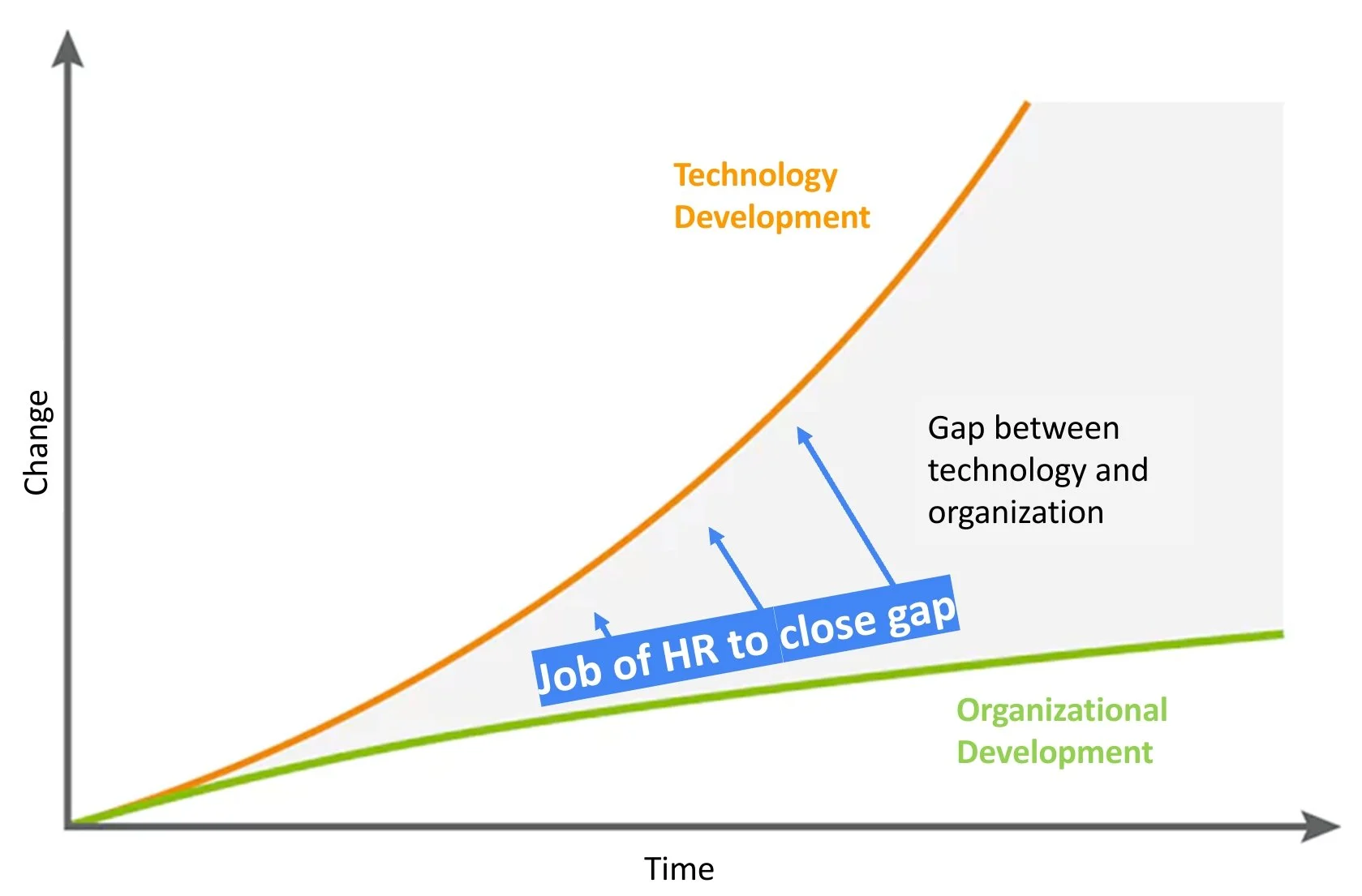
Many leaders find it challenging to keep pace with current trends. This isn’t necessarily a failing on their part, but rather a reflection of the inherent dynamics at play. Leaders who aren’t feeling stretched thin are likely either overlooking important trends or resisting necessary organizational adaptation. We are in the midst of a work revolution driven by artificial intelligence and automation. Technology is advancing exponentially, while organizations and their employees adapt at a more linear pace. The crucial task for leaders is to minimize this gap, enabling organizations to adapt and remain competitive. This tension is particularly pronounced right now, given the rapid pace of technological change.
Bridging the Gap: 7 Key Strategies
One of the most critical functions in the modern age is to help organizations effectively navigate this technological landscape. People leaders need to be strategic partners, aligning people, processes, and structures with the new technological realities. Here are the key strategies to effectively close the gap between technology and organizational structure:
1. Understanding Technology
Build a solid understanding of the technologies being implemented, their potential impact on the workforce, and the skills required to use them effectively. Collaborate with IT departments, attend industry events, and commit to continuous learning.
2. Workforce Planning
Proactively assess the impact of new technologies on job roles. Identify potential skill gaps, forecast future workforce needs, and develop specific strategies for upskilling or reskilling employees.
3. Change Management
Manage change actively to ensure smooth transitions and address employee concerns. Provide clear communication, comprehensive training, and emotional support to help employees adapt to new workflows.
4. Talent Acquisition
Attract and recruit talent with the digital literacy and adaptability necessary to thrive in a technologically driven environment. Update job descriptions and expand recruitment channels.
5. Learning & Development
Create a culture of continuous learning by providing employees with opportunities (workshops, online courses, mentorship) to keep their skills sharp as technologies evolve.
6. Organizational Design
Ensure that the organizational structure supports efficient workflows. Redesign roles, establish cross-functional teams, and implement agile methodologies where helpful.
7. Employee Engagement
Foster a culture of innovation and empower employees to embrace new systems. Encourage safe experimentation, recognize and reward innovative ideas, and provide platforms for sharing improvements.