HR Operating Model
Every HR organization eventually reaches a point where it needs to define its operating model to establish an efficient structure that delivers desired business outcomes.
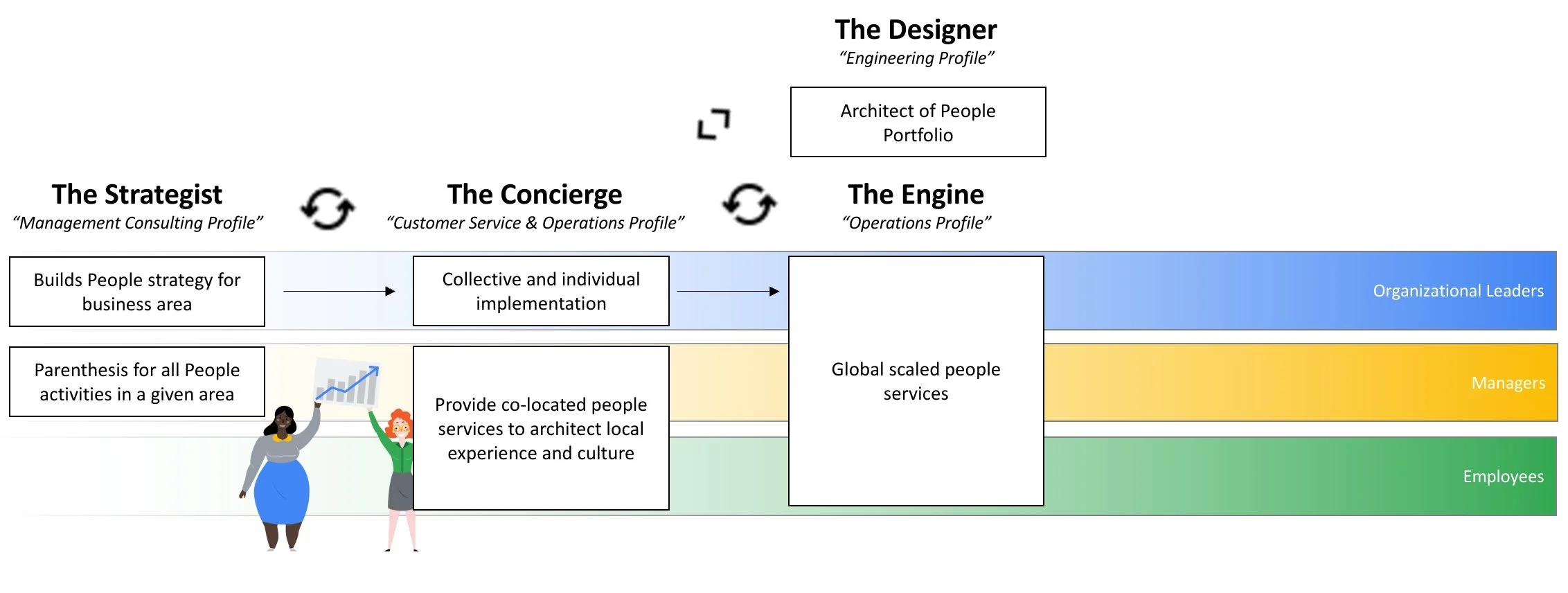
The Engine
Standard, high-volume tasks such as contract administration, mobility, payroll, and basic employee inquiries are best handled within a globally scaled people services model. This centralized approach ensures efficiency and consistency.
The Designer
Functions like Total Rewards, Talent Development, and Compliance reside within global Centers of Excellence. These groups are responsible for developing policies, processes, and best practices, which are then adapted and implemented by the service model across the organization.
The Concierge
Not all operations can be globally scaled. Local requirements, such as dealing with unions or workers councils, and the need to create memorable people experiences necessitate a local presence. This “Concierge” model includes location or event managers who act as the local face of HR, fostering local culture and driving engagement.
The Strategist
To drive organizational change and strategy, HR Business Partners develop the people strategy for their respective business areas. They then lead the end-to-end implementation of people-related initiatives, collaborating with all other HR functions.
A key component of the HR Operating Model is the approach in which HR interacts with the organization. This is a reflection of how HR leadership defines its role. More traditional HR organizations have a self-image of creating policy and process and then executing it. In more advanced organizations, the HR function acts as a service and advisory function. I prefer a model in which HR becomes a value driver for the organization. In this model, HR does not see itself as a function supporting “the business” but understands itself as part of organizational success, with responsibility to co-drive business outcomes.
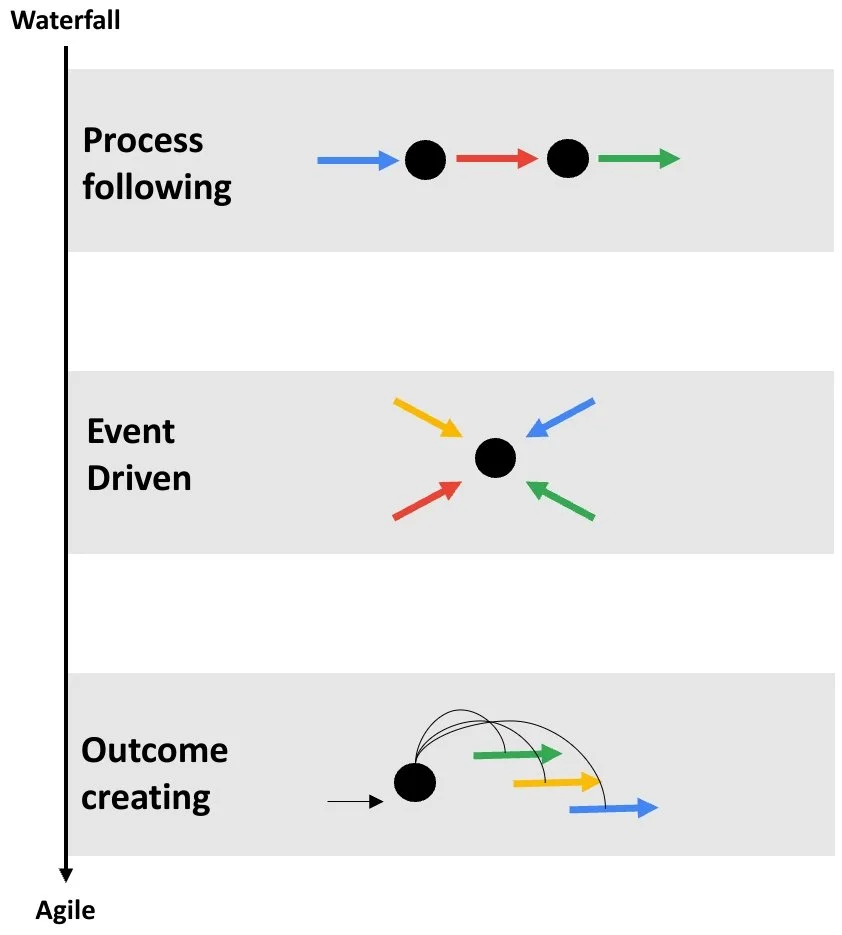
Modes of Interaction
Process Following
Classical HR model for processes in sync with the financial year of the company. The fiscal year is planned with specific milestones such as salary planning, talent review, and performance rating.
Event Driven
An evolved approach in which HR tackles specific tasks or events that are non-standard or unscheduled. Offers flexibility to successfully resolve events outside the regular cycle, such as off-cycle salary increases, restructurings, and project implementations.
Outcome Creating
Co-accountable for business outcomes. Creates value by crafting people solutions that drive commercial impact. HR integrates directly into the business ecosystem to meet customer needs, focusing on proactive performance management, organizational growth, and effectiveness.